Driif Mission OS

The operating system for autonomous missions.

Orchestrate heterogeneous multi-OEM autonomous systems through one mission network. Coordinate operations across platforms, sensors and effectors, with intelligence and execution distributed to the edge.

The Coordination Gap

Autonomous fleets are growing fast. The new problem isn’t capability. It’s command and coordination.

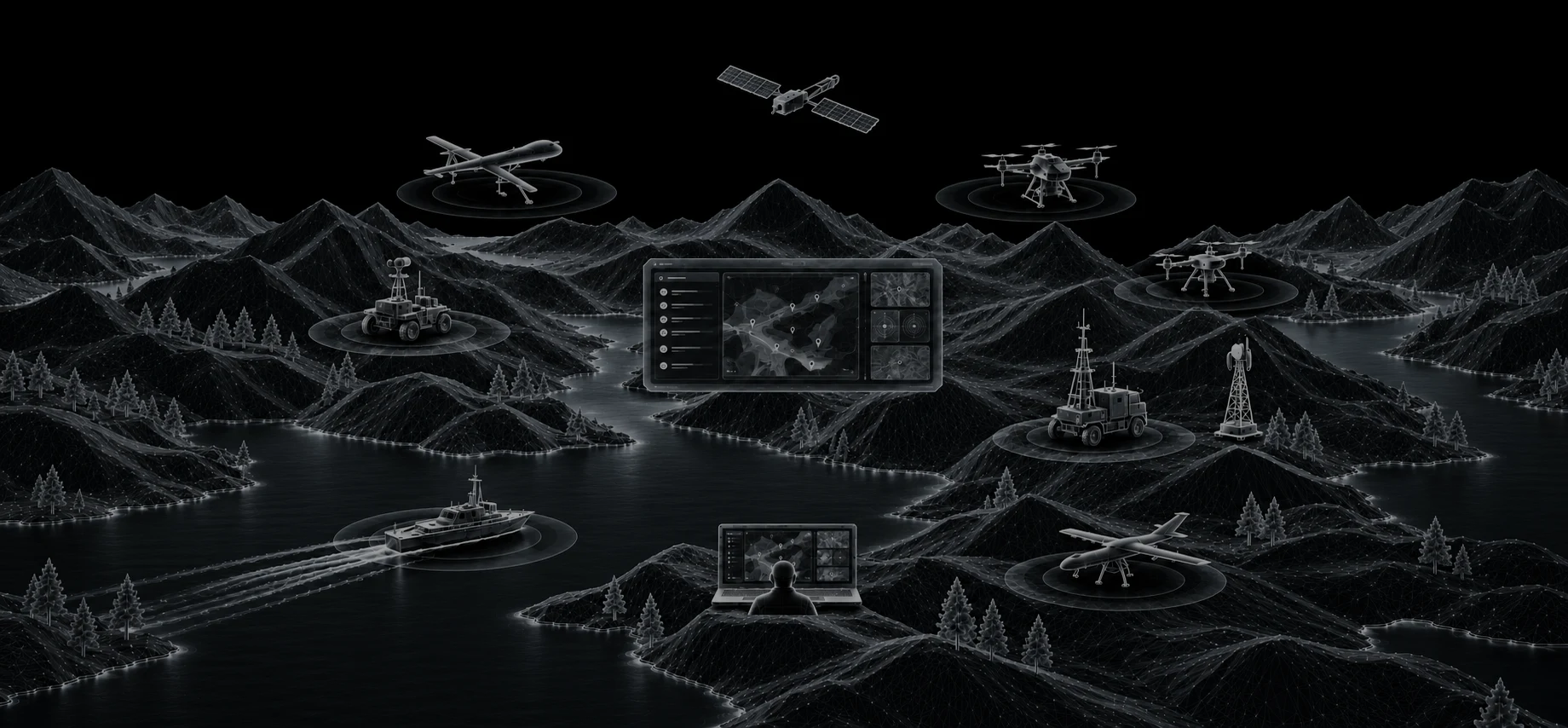
Modern missions span heterogeneous platforms, sensors and effectors from multiple OEMs. But their intelligence, tracks and control remain split across separate systems. As operations scale, fragmentation becomes an operational liability:

Blind spots multiply

No single system holds the complete operational picture.
Operators become the bottleneck

As autonomous fleets grow, manual coordination struggles to keep pace with the scale and speed of operations.

Autonomy stays fragmented

Autonomous systems are advancing, but operate in silos rather than as a coordinated force.

The force is becoming more autonomous. The mission still lacks a unified layer to bring it together.
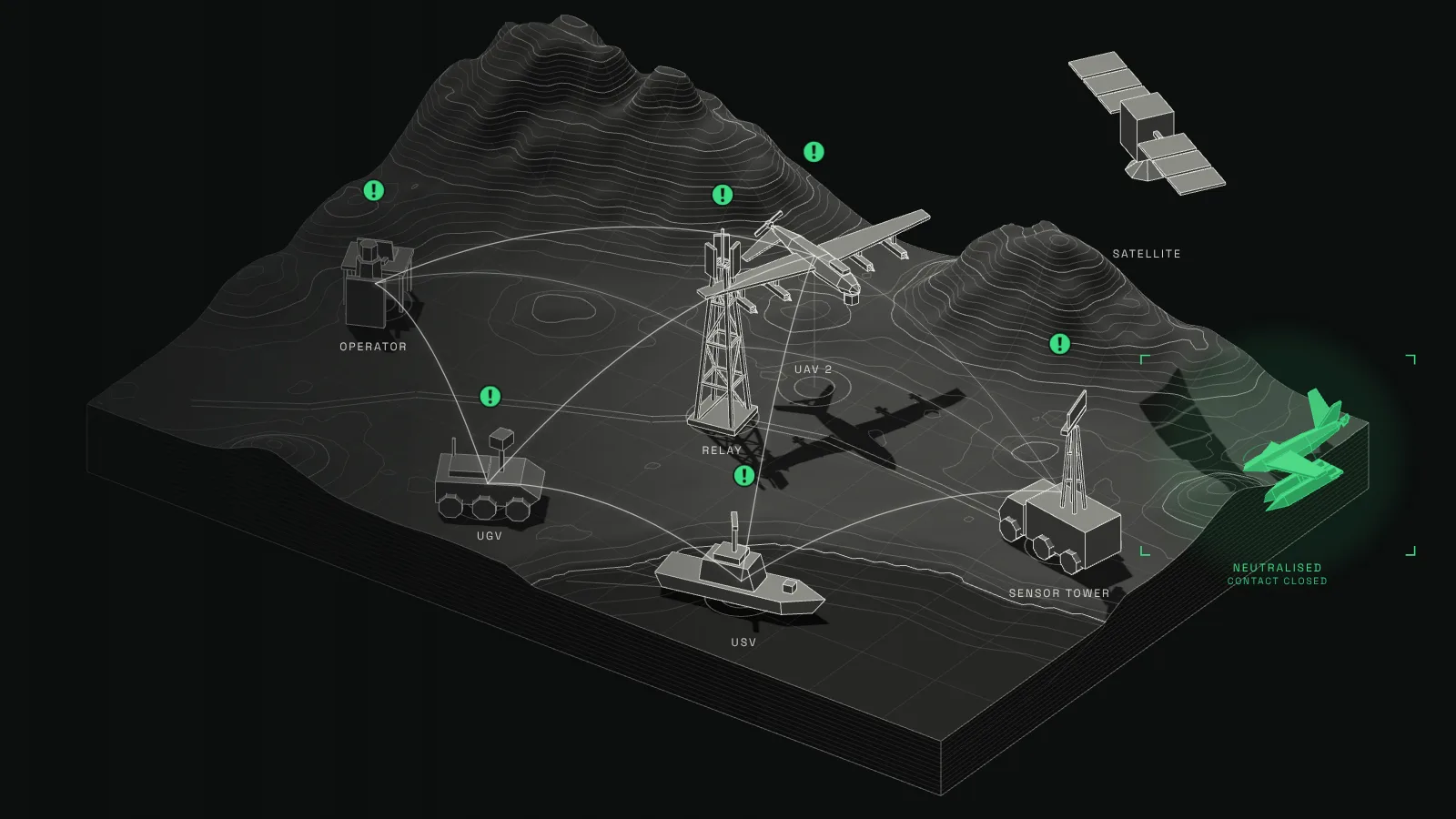
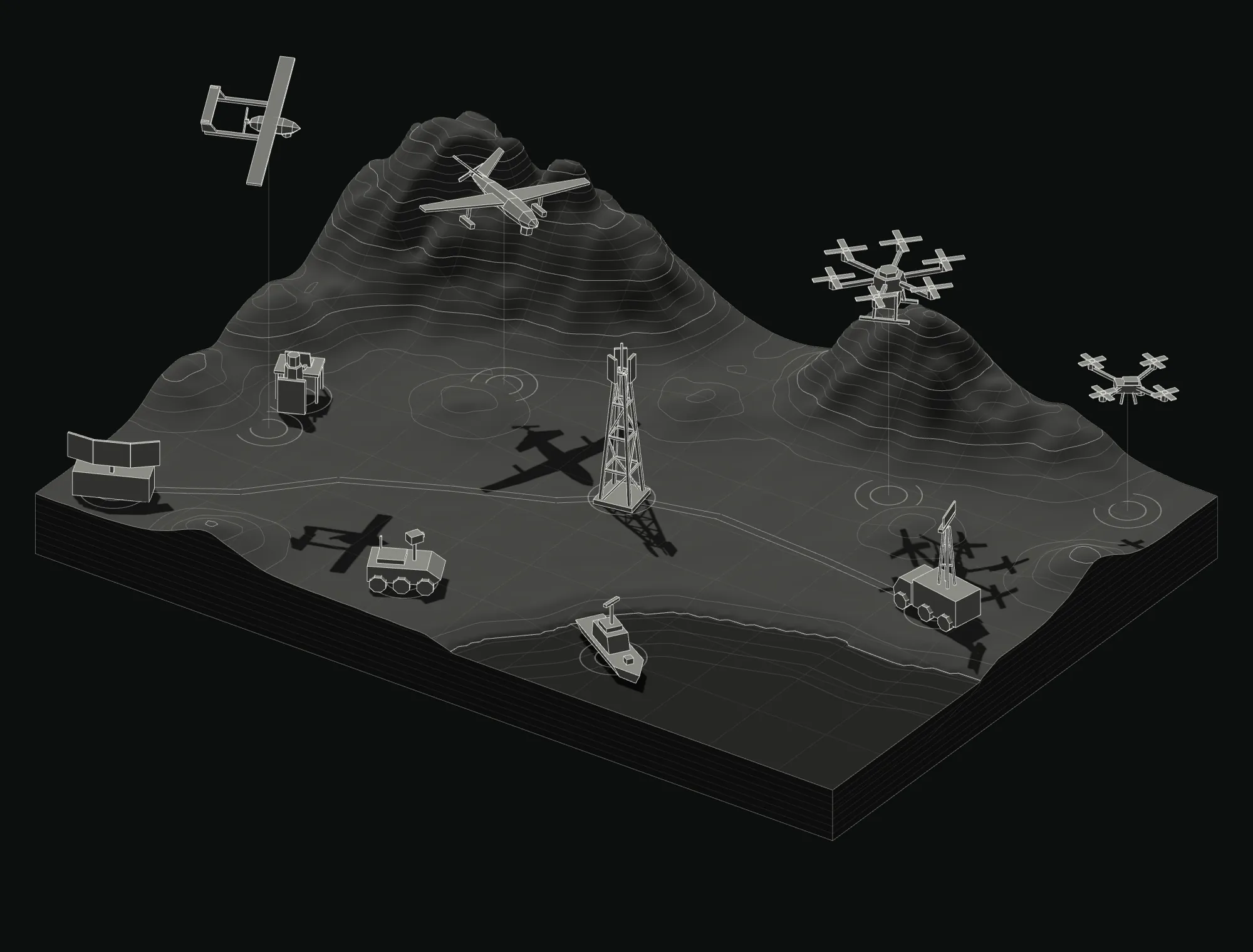
A 3D night map: a threat drone is tracked by a UAV, the contact passes across the UGV, USV and operator and then to the relay and sensor tower; the first UAV is lost, the mesh reroutes and the second UAV neutralises the threat, which turns green.

Mission Network

One mission network. Distributed coordination.

Mission OS connects operators, sensors and autonomous platforms through a peer-to-peer network that shares mission state across the force. It enables distributed tasking, coordinated execution and edge-level decision-making across heterogeneous systems, without making every action dependent on central command.

  1. 01

    Peer-to-peer coordination

    Share mission state directly across network nodes.

  2. 02

    Multi-bearer connectivity

    Integrate RF and tactical links, 5G/LTE, SATCOM and in-service radio systems.

  3. 03

    Resilient operations

    Sustain coordination through intermittent connectivity and degraded communications.

Peer-to-peer coordination

Share mission state directly across network nodes.

Multi-bearer connectivity

Integrate RF and tactical links, 5G/LTE, SATCOM and in-service radio systems.

Resilient operations

Sustain coordination through intermittent connectivity and degraded communications.

How Mission OS Operates

Orchestrate the mission. Not just individual systems.

Plan

Define mission objectives, operating constraints, assets and task relationships across the force.
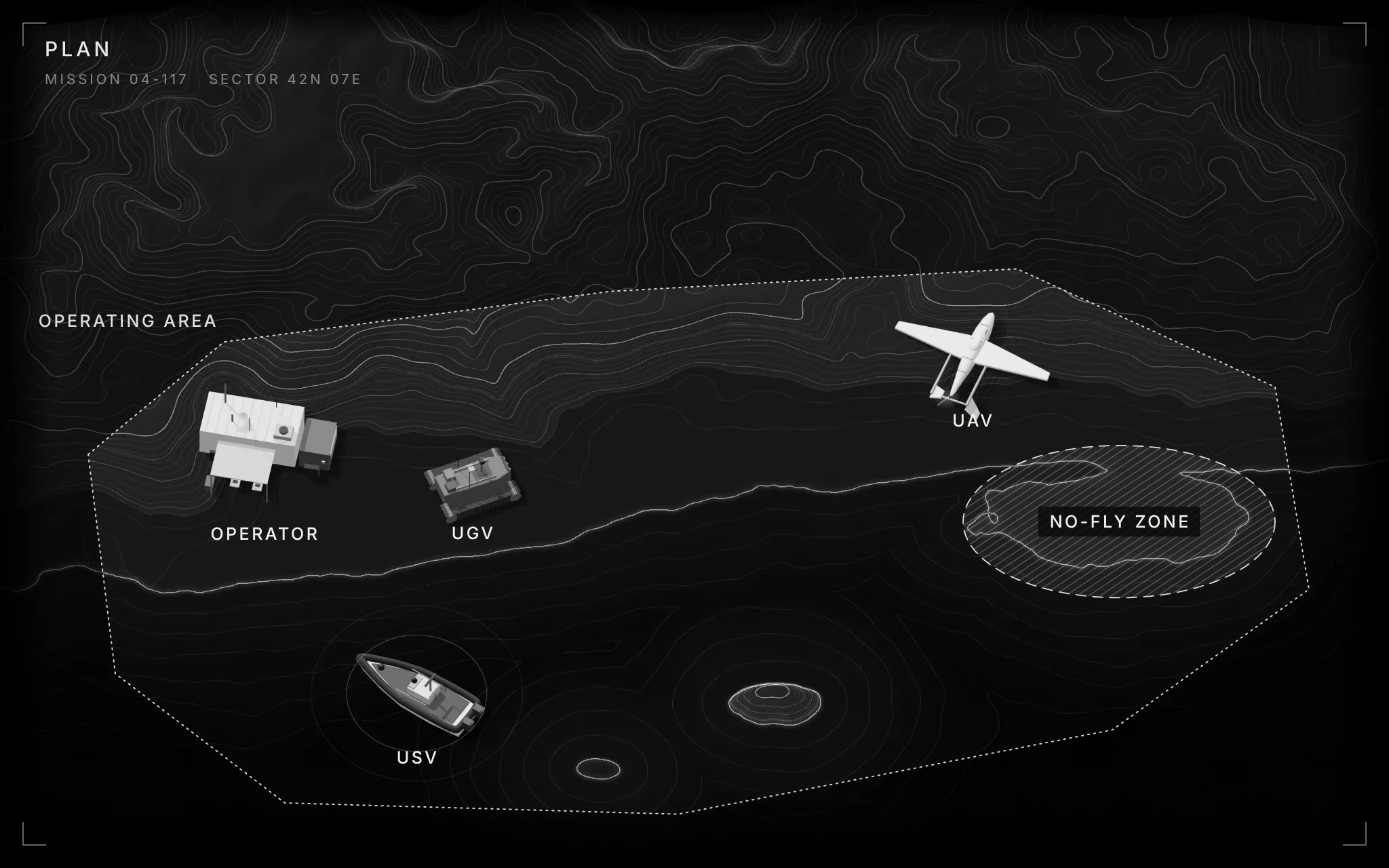
A contour map of an operating area on a coast. A border is drawn first, then an operator station, a UGV, a UAV and a USV appear at their staging points. A dotted outline marks the operating area, and a no-fly zone is set off to one side.

Task

Dynamically assign and reassign assets based on mission objectives, platform state and available capability.
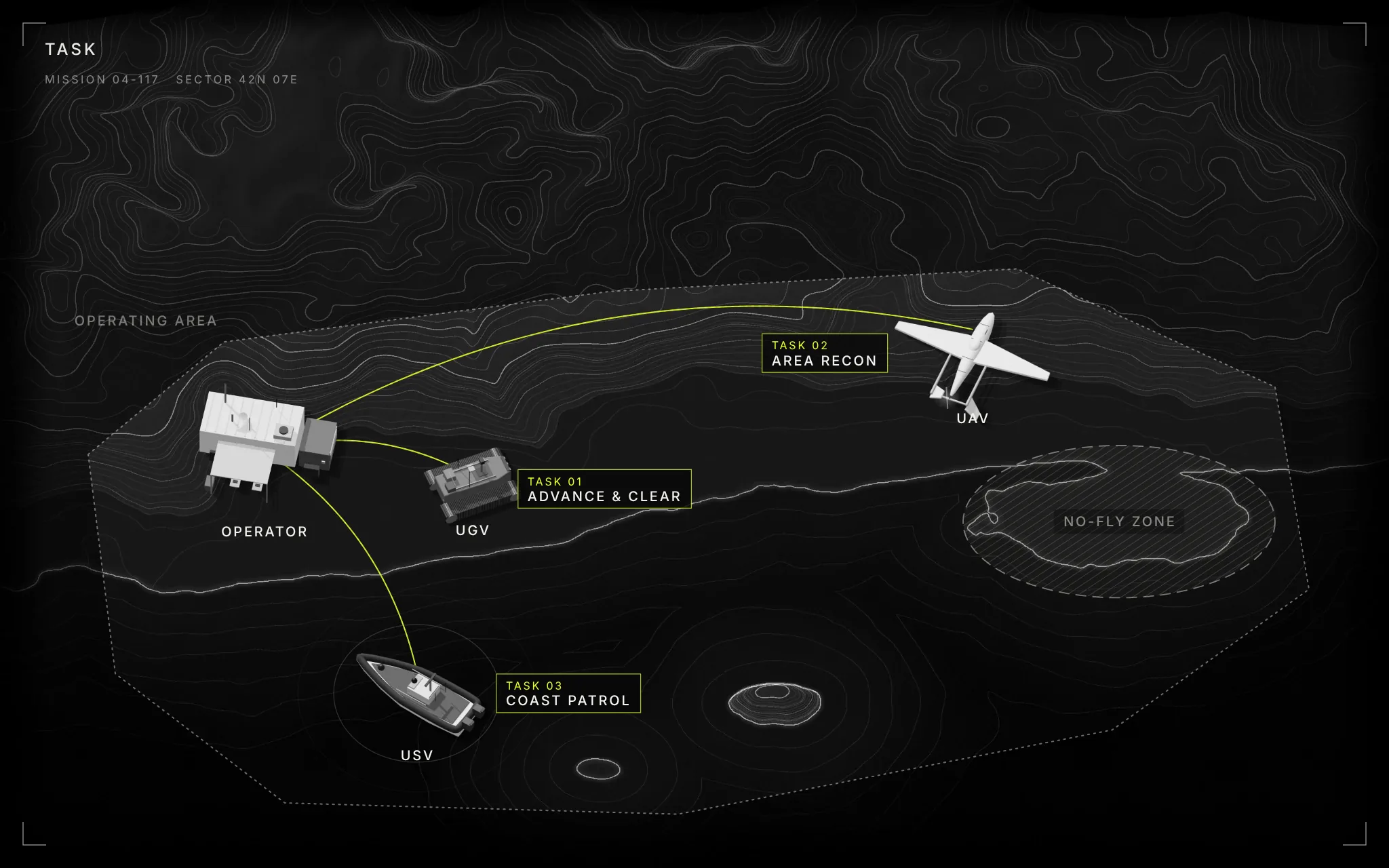
The same operating area on a contour map. The operator is already linked to the UGV, the UAV and the USV. It then assigns each vehicle its own task: each link lights up in yellow in turn and the vehicle receives a task tag, advance and clear for the UGV, area recon for the UAV and coast patrol for the USV.

Fuse

Correlate telemetry, sensor inputs and mission context to maintain a shared operational picture.

The same operating area, with the routes solved in Task carried as quiet context. Each asset sweeps the area it was assigned in Task, following the route it solved: the UAV covers the survey area, the USV the screen area, the UGV the terminal it was sent to inspect. Where the survey and screen coverages overlap, two sensors separately detect the same object in slightly different places. The picture holds on the two uncorrelated marks. Then links form between all three assets and information passes along them, and only once the picture is shared do the two detections resolve into a single track, TRK 07, still unclassified.

Sense

Interpret the fused picture to identify changes, activity and emerging conditions across the mission.

The same operating area, carrying TRK 07 forward from Fuse, still unclassified. Six faint pulses check different points against the pattern of normal activity in turn — five fade, matched to routine traffic and dismissed. One, near the port terminal, does not fade: it holds and brightens as a change with no baseline match, and the readout updates from interpreting the picture to one of six patterns held. TRK 07's flag settles and clears, its correlation already logged, attention having moved to the new pattern.

Execute

Push defined tasks and mission logic to the edge, allowing assets to continue operating through link degradation or loss.

All three assets are running their assigned tasks and the links between them are carrying traffic. The links begin to degrade: packets slow, then stall where they are, and the mesh goes dark. Nothing else stops. The sensor sweeps keep running across all three areas, each asset shows a local decision loop, and the position of TRK 07 keeps updating with no link to report it over.

Adapt

Reconfigure tasking and coordination as the operational picture changes.

The link is still down and the two other assets are still sweeping their areas. A new contact appears close to the ground vehicle and is classified hostile, with a standoff ring around it. The ground vehicle's inspect task is released, its route to the terminal fades, and it turns toward the new contact and holds at standoff — every part of it decided locally, with no link to ask over.

Mission Autonomy

Human authority. Autonomous execution.

Mission OS translates mission intent into executable tasks across heterogeneous platforms. Edge agents handle defined tactical actions locally, while mission policies and command authority govern how those actions are executed.
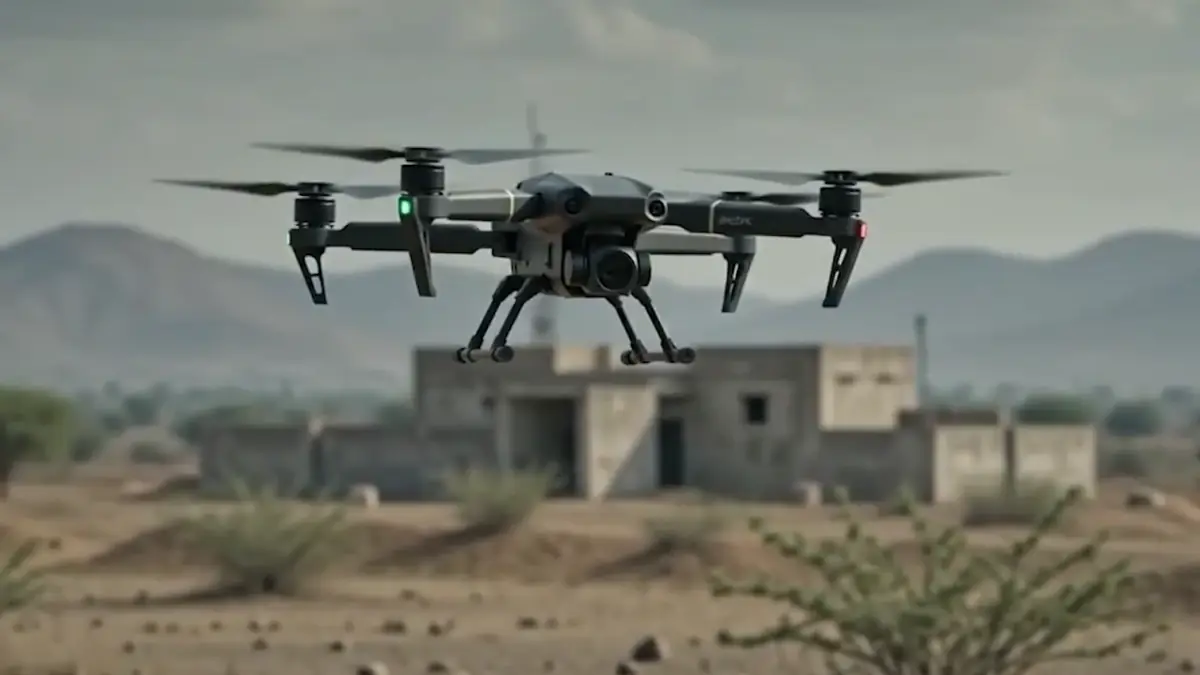
Placeholder video · final render to come
  1. 01

    Scale operations without scaling operator workload

  2. 02

    Respond to failures without waiting for manual intervention

  3. 03

    Execute within defined mission constraints

  4. 04

    Keep human authority in the decision loop

Edge-to-Edge Mesh

Keep the mission moving. Even when connectivity is disrupted.

SCOUT, Driif’s Edge Agent, brings mission logic and execution onto autonomous platforms. Assets continue supported onboard functions when links to central command are disrupted, while the peer-to-peer mesh enables coordination across available nodes.

  1. Peer-to-peer mission state sharing. No single point of dependence.

  2. Mesh failover maintains state synchronisation through jamming, dropouts and air-gapped operation.

  3. Silent operation with zero RF emissions.

  4. One mesh across RF and tactical links, 5G/LTE, SATCOM and in-service Army radio.

  5. Adapts links in electronic warfare environments.

  6. Lightweight deployment across large numbers of low-cost autonomous systems.
Products
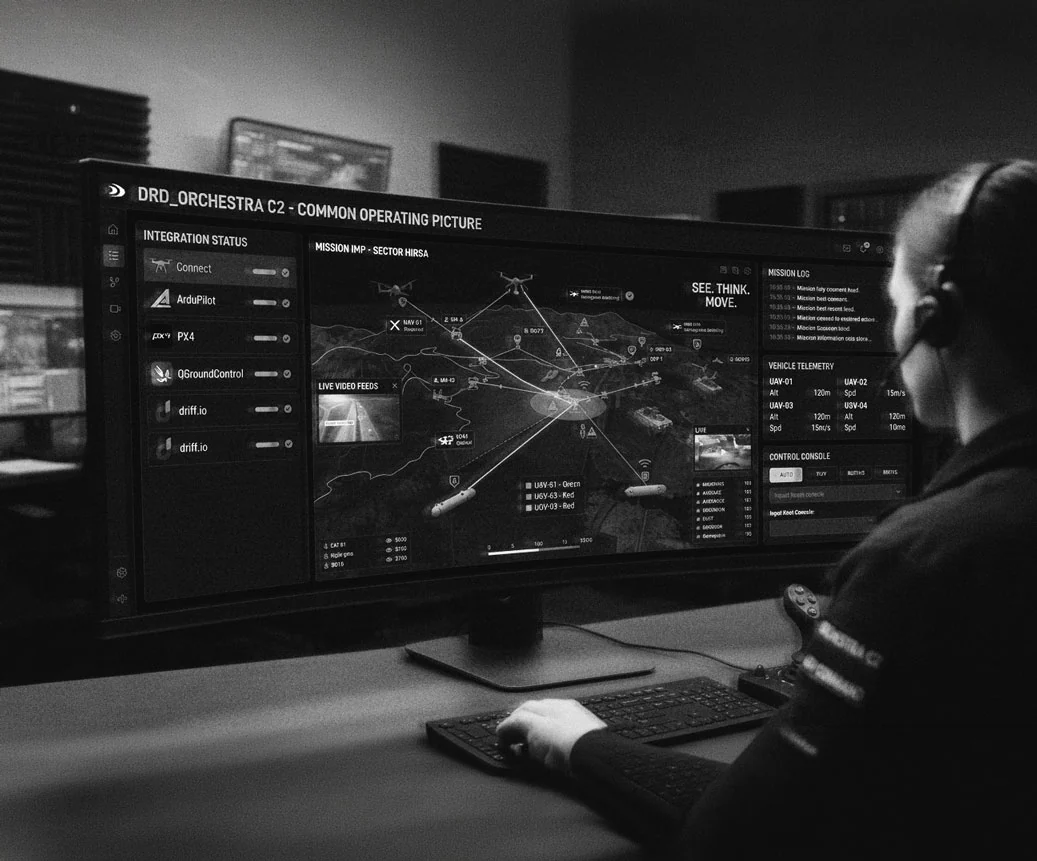
Two products. One mission layer.

For the fleet you operate

VIPER

Orchestrate heterogeneous autonomous fleets through mission-aware tasking, payload coordination and collaborative execution. More on VIPERShow less

VIPER gives operators a shared environment to define mission intent, allocate tasks and coordinate execution across the network.

Platform state, sensor inputs and intelligence are brought into the same mission context, allowing distributed systems to contribute to one coordinated objective.
Mission orchestration
Coordinate heterogeneous platforms around a common mission objective.
Cooperative autonomy
Enable platforms to execute defined tasks while operating as part of a larger mission.
Shared operational picture
Combine platform state, telemetry and sensor inputs into a common view of the mission.
Dynamic tasking
Reassign tasks as mission objectives, platform state and operating conditions change.
IFF
Identify and distinguish friendly platforms through mission context and multiple sources of information.
Platform agnostic
Integrate existing and future platforms across manufacturers and domains without replacing the underlying infrastructure.
Explore VIPER →
For the threats you defeat

NEXUS

Fuse multi-sensor tracks and coordinate counter-UXV responses across detection, decision and effector systems. More on NEXUSShow less

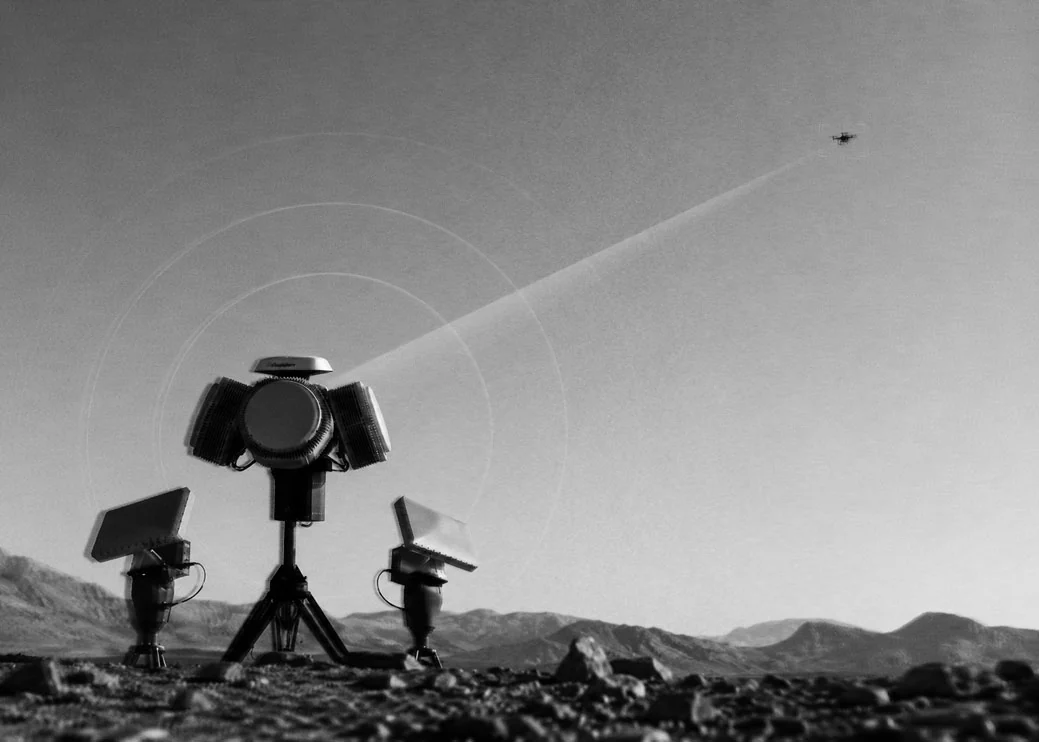
NEXUS is the decision layer that turns detection into coordinated action.

  • Multi-sensor fusion across RF, radar and EO/IR
  • Shared mission & threat context · IFF / Blue-on-Blue resolved using mission state
  • Mission-aware dynamic ROE (T0–T5) · Real-time escalation & response selection
  • Edge-to-edge coordination · Gap-free handoff · Persistent memory under degraded comms
Explore NEXUS →

Deployments

Mission OS, extended to the field.

Complementary systems bring Driif’s mission capabilities into field deployments, from edge-level execution on autonomous platforms to portable command and communications infrastructure.

Visual to come: SCOUT running on an autonomous platform

Edge agentSoftware

SCOUT

Edge intelligence for autonomous platforms.

Driif’s edge agent, SCOUT, extends VIPER and NEXUS capabilities onto autonomous platforms, bringing mission logic and execution closer to the point of action.

Visual to come: approved photograph of the C4 node

Field command & controlHardware

Man-Portable C4 Node

Command capability in a deployable form.

A compact field unit integrating communications, a tablet, antennas and power. Designed to enable one operator to manage 100+ unmanned and counter-unmanned systems for 3–6 hours.

100+Systems, one operator

3–6 hOperating time

Get Started

Bring every system into one mission.

We integrate what is already fielded. Nothing is replaced.

Request a demo

Glossary

The language of autonomous operations.

UAS, IFF, C-UAS, swarming: the vocabulary around multi-domain autonomy moves fast. Our glossary defines the terms that matter in plain language, with a short quiz to test what stuck.

Explore the glossary