VIPER
Mission OS for autonomous forces.
Coordinate heterogeneous aerial, ground and maritime assets as a unified operational force through mission orchestration, shared awareness and distributed autonomy.
Every system sees a piece. The mission needs the whole.
Modern missions increasingly depend on distributed platforms and intelligence systems.
But these systems often operate within separate control architectures and vendor ecosystems. Their data remains local to the system that produced it, making it difficult to correlate events across the network or maintain a common mission picture.
The result is a mission constrained by its interfaces:
-
Signals detected in isolation rather than correlated across sensors and platforms.
-
Event timelines fragmented across independent systems.
-
Platform state and intelligence separated from the mission context needed to act on them.
-
Operators managing individual systems instead of directing the mission.
-
Every new platform adds another interface, control logic and training burden.
VIPER is built to close that gap.
Key figures
By the numbers
-
Placeholder metric one01
64 Placeholder supporting line -
Placeholder metric two02
98% Placeholder supporting line -
Placeholder metric three03
2,500+ Placeholder supporting line -
Placeholder metric four04
15 Placeholder supporting line
The Mission Layer
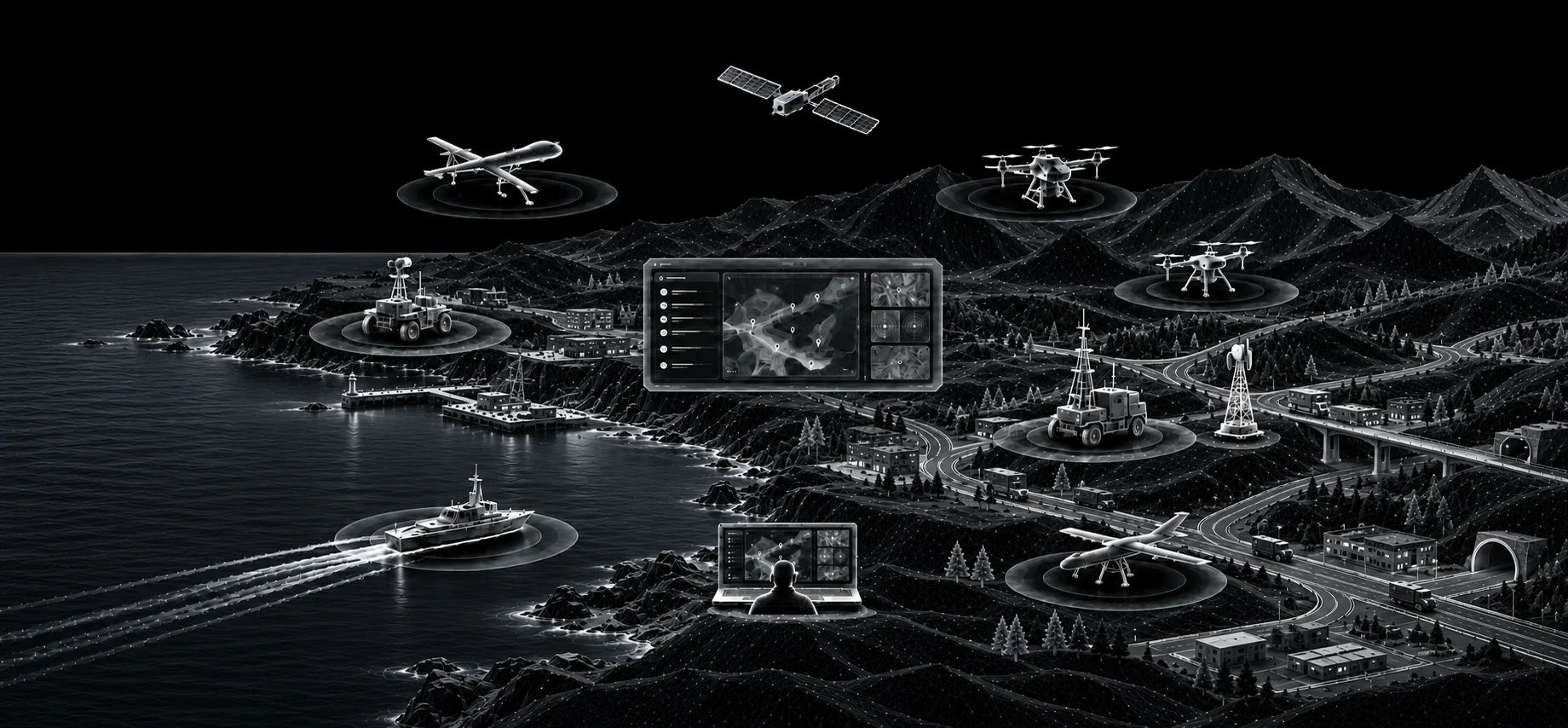
VIPER puts the mission above the individual system.
 Satellite
Fixed-wing UAV
Heavy-lift UAV
Recon UAV
UGV
RF Sensor
Comms Relay
USV
ISR UAV
Operator
VIPER Mission OS
Satellite
Fixed-wing UAV
Heavy-lift UAV
Recon UAV
UGV
RF Sensor
Comms Relay
USV
ISR UAV
Operator
VIPER Mission OS
Mission Layer
VIPER sits above existing platforms, sensors and control systems, connecting their capabilities through a common mission layer. It gives operators a shared environment to define mission intent, allocate tasks and coordinate execution across the network.
Platform State
Platform state, sensor inputs and intelligence are brought into the same mission context, allowing distributed systems to contribute to one coordinated objective.
Operating Model
Built for real-world autonomous operations.
Mission Orchestration
Coordinate heterogeneous platforms around a common mission objective.
Cooperative Autonomy
Enable platforms to execute defined tasks while operating as part of a larger mission.
Shared Operational Picture
Combine platform state, telemetry and sensor inputs into a common view of the mission.
Dynamic Tasking
Reassign tasks as mission objectives, platform state and operating conditions change.
IFF
Identify and distinguish friendly platforms through mission context and multiple sources of information.
Swarming
Coordinate multiple autonomous platforms to execute a shared objective with distributed tasking and coordinated behaviour.
Platform Agnostic
Integrate existing and future platforms across manufacturers and domains without replacing the underlying infrastructure.
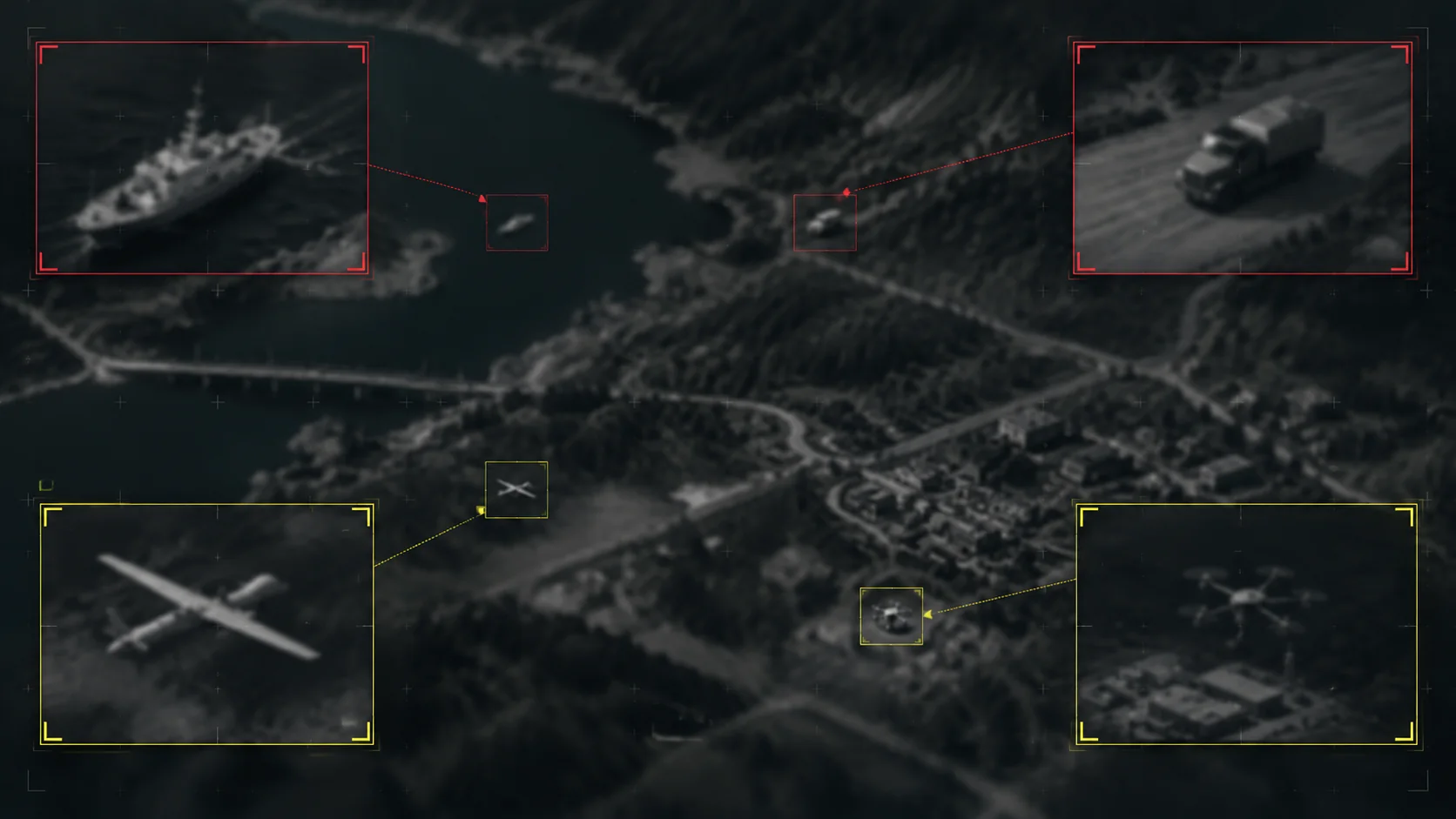
Threat Classification & Detection
Classify and detect potential threats using distributed sensor inputs and mission context.
 Coming soon
Edge Autonomy
Autonomy that doesn’t stop at the control room.
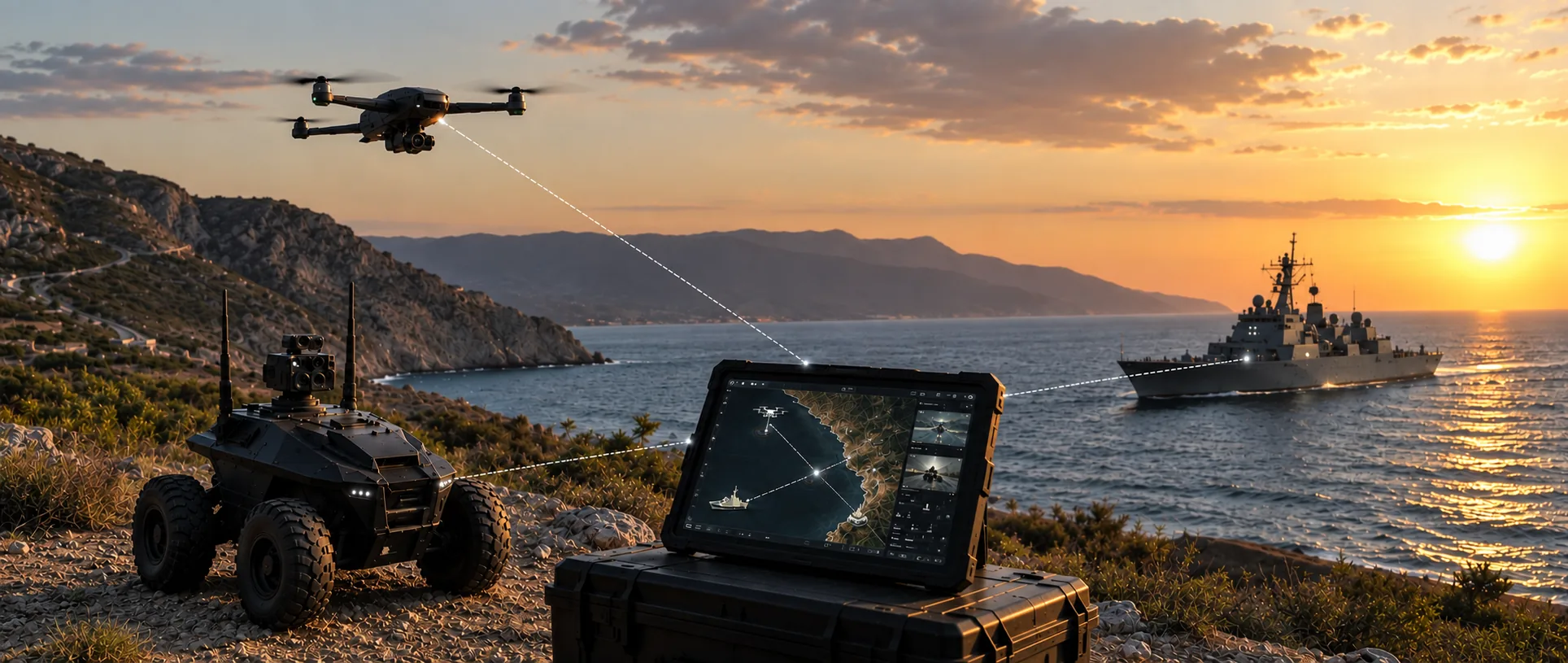
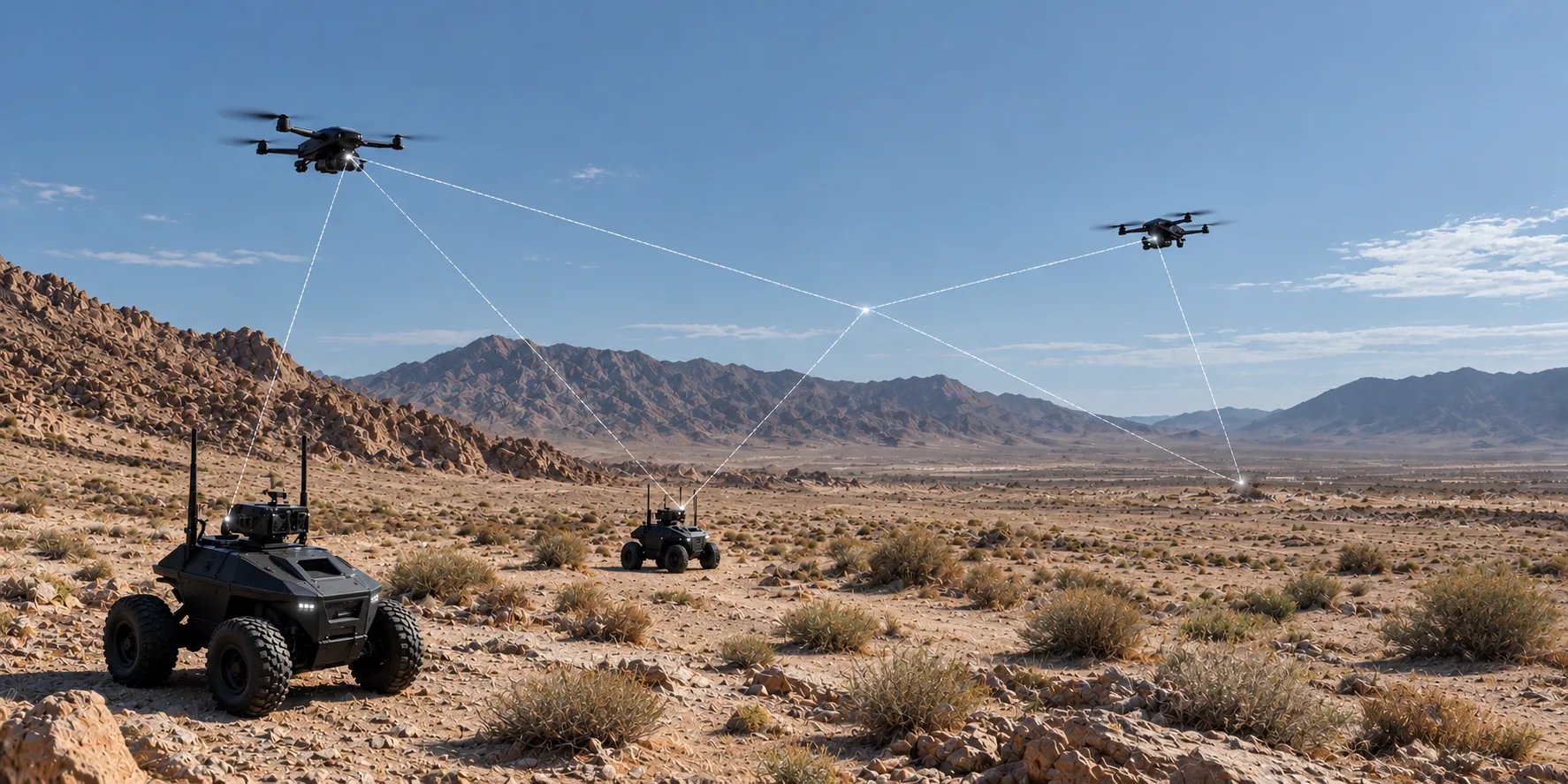
VIPER distributes mission logic to the edge through SCOUT, the Driif Edge Agent. Running on the platform, SCOUT enables local decision-making and mission execution when connectivity to the control layer is degraded while keeping operators responsible for mission intent and critical decisions.
Edge Execution
SCOUT executes mission logic at the edge, without relying on continuous GCS or cloud connectivity.
Edge Execution
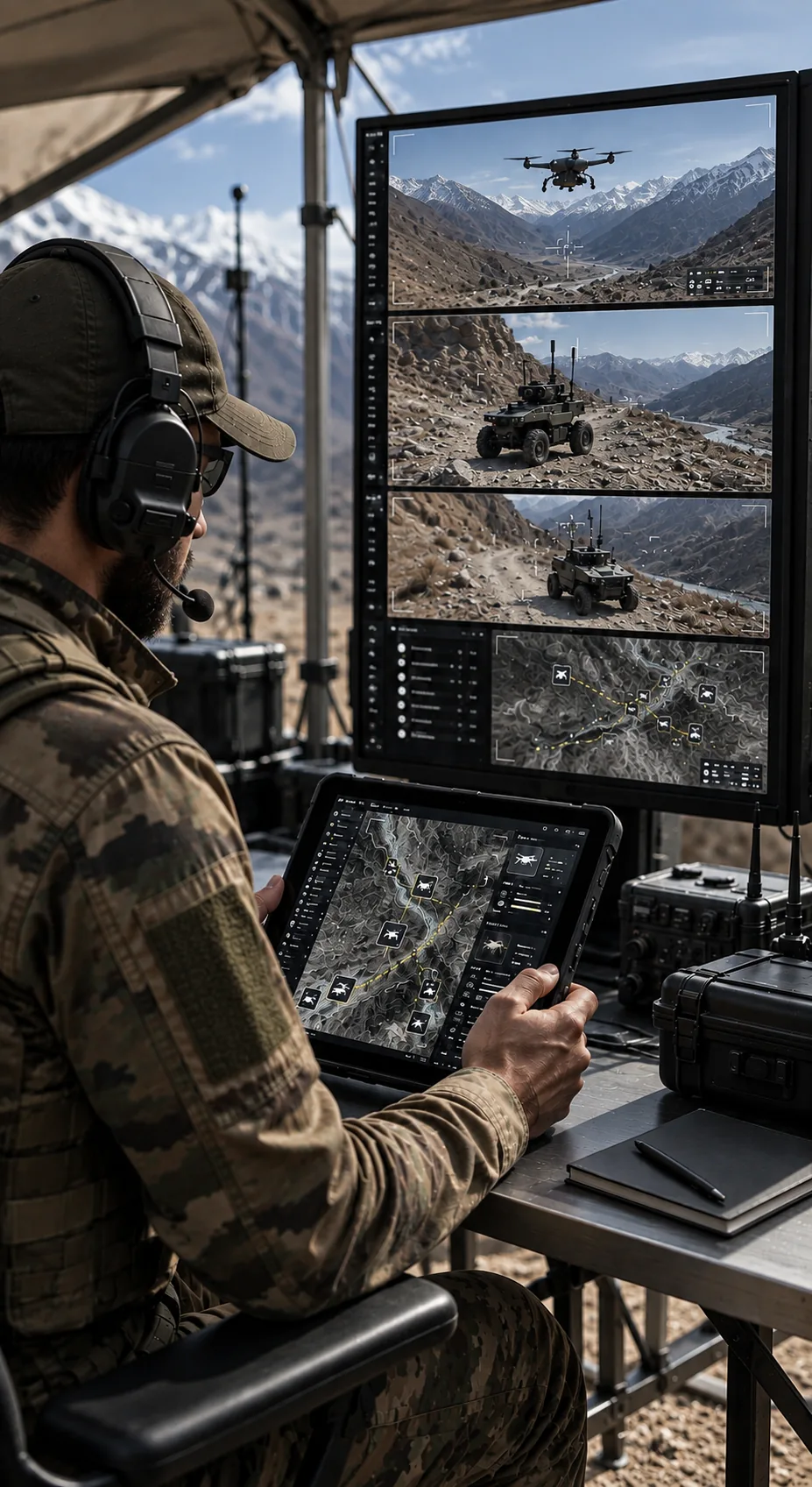
Human Authority
Operators retain control over objectives, rules and critical decisions.
Human Authority
Degraded Connectivity
Mesh networking and synchronized timelines maintain coordination in contested or degraded environments.
Degraded Connectivity
The Operator Experience
The operator manages the mission. Not every platform.
Faster induction, lower training cost per operator, a force that scales with procurement.
APIs and integration platforms move data between systems but can’t orient, decide, or act at mission speed.
A decision layer built to allow you to act at the pace the mission needs.
Single-vendor systems lock you into one OEM’s ecosystem.
Hardware-agnostic. Works with what you’ve already deployed, from any manufacturer.
OEM-specific control room per platform.
An operator trained on VIPER can command every platform in the fleet.
Every new platform means retraining.
New platforms inherit the same command logic and interface.
Operators overloaded in high-tempo ops.
Edge autonomy handles real-time classification and rule enforcement. Operators focus on decisions, not babysitting platforms.
Get Started
Coordinate the force. Control the mission.
Bring your heterogeneous platforms and systems into one mission environment.
Talk to Driif